From Lab Breakthrough to ChemPark-Ready: How Cyclize Builds an Organization for Industrial Scale
In reporting on DeepTech start-ups, the focus is usually on technological disruption—in the case of Cyclize, on defossilizing the carbon cycle using plasma reforming for the chemical industry. The technology readiness level (TRL) should increase with each development cycle. However, a second, parallel scaling process is crucial for operational success: the transition from an agile founding team to a resilient organization in a market environment that, as in the chemical industry, is characterized by very high safety requirements and strict regulation.
The Challenge: Agility vs. Industrial Compliance
Unlike in pure software markets, Cyclize operates in the chemical industry, one of the most heavily regulated sectors in the world. The challenge of operations is to create a structure that is stable enough for industrial approval processes, but remains flexible enough to allow for rapid technological iterations.
Two levels need to be managed simultaneously:
- Technological scaling: the path from the first laboratory reactor in the milliliter range to a commercial plant involves scaling by a factor of 100,000.
- Organizational scaling: Safety requirements, infrastructure and the complexity of internal processes must grow in parallel with the technical throughput: We are already implementing safety concepts at the pilot plant in such a way that they are directly compatible with the standards of large-scale chemistry. This is a strategic necessity in order to master the transition from development to industrial application without regulatory disruptions.
Data-driven Operations: Replacing Experience with Evidence
In chemistry, many processes are based on decades of operational experience. Since little historical data is available for the plasma reforming of complex waste streams, Cyclize compensates for this vacuum with a consistently data-driven approach.
In concrete terms, this means organizational development:
- Monitoring: Where standard sensors are lacking, we develop our own measurement concepts for continuous monitoring.
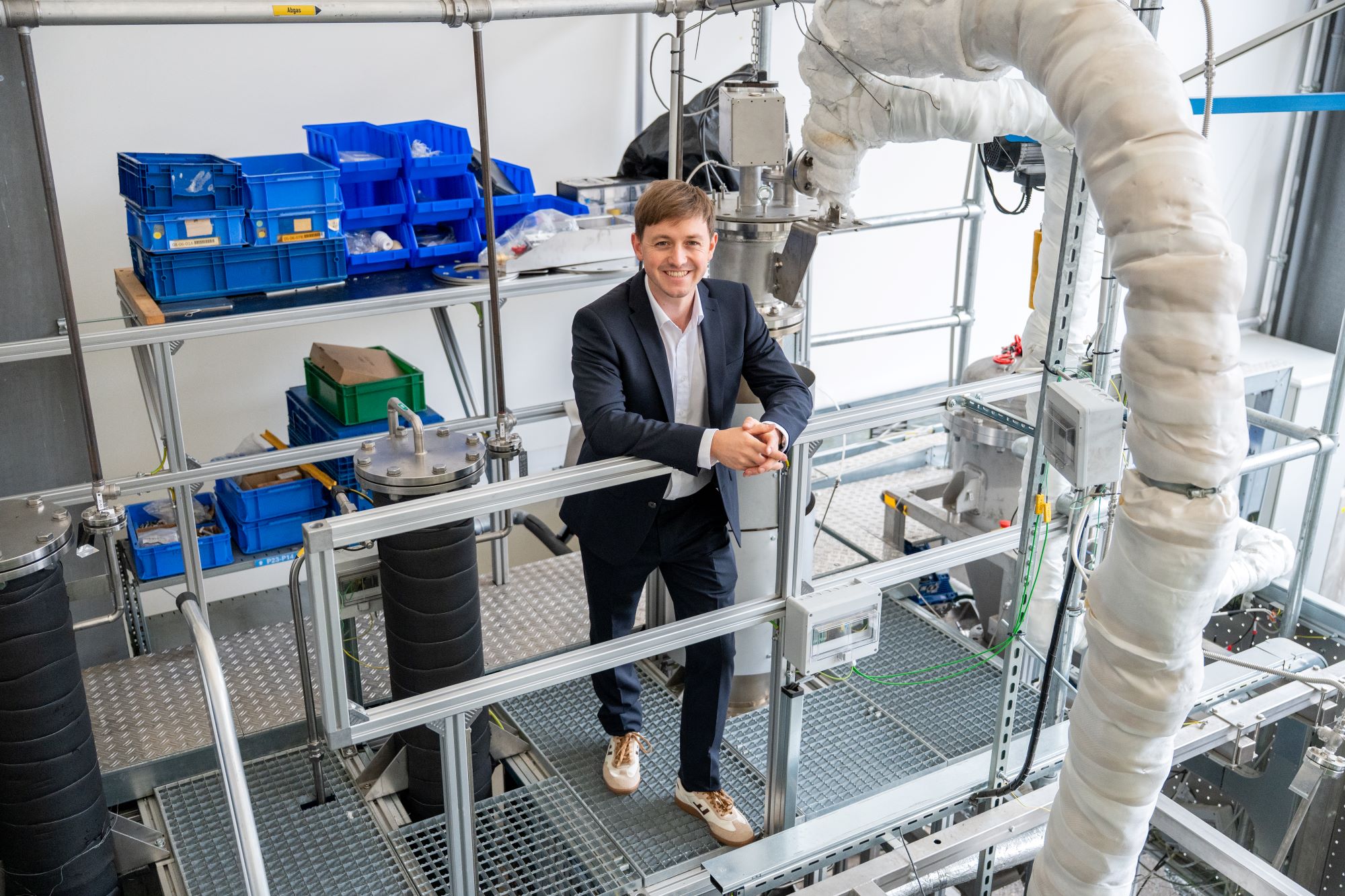
- Interdisciplinary test series: All engineering disciplines work closely together on the pilot plant and test stands to derive resilient operating concepts from measurement data instead of relying on mere assumptions.
- Market challenge: Through intensive exchange with the market and experts, we continuously validate our concepts against the requirements of the industry.
Personnel Strategy: Learning Curve Optimization and Pioneering Spirit
The transition from the founding team to the first hirings marks a critical phase. In personnel development, we focus on a balance between seniority and high adaptability.
- Pioneering spirit over routine: In untapped markets, the ability to quickly familiarize oneself with new chemical and technical problems is often more valuable than simply managing existing material.
- Cultural transfer: The stringent focus on future-proof development and the perseverance that characterizes Cyclize are specifically passed on to new team members.
- Science meets craftsmanship: Developing, building, testing and optimizing systems requires that scientific expertise goes hand in hand with craftsmanship. And we thrive on that.
- Expertise niches: We attract specialists for highly specific tasks such as plasma design who are ready to translate technological excellence into operational safety.
Operations as an enabler of industrial maturity
While technological innovation is usually the trigger for initial discussions and interest on the part of potential partners and customers, it is operations that has to be convincing for the doors to the ChemPark to open. Over time, the role of operations shifts from pure procurement to strategic planning of scaling cycles. A central point is the identification of the economic optimum between scaling (enlargement of individual units) and parallelization (interconnection of several units).
For organizational development, this means
- Minimize fault tolerance: While errors can be corrected cost-effectively in the laboratory, delays in larger project consortia lead to massive cost increases.
- Ensure availability: The transition from laboratory operation (a few hours) to industrial 24/7 operation (8,000 annual operating hours) requires a completely new maintenance and operations strategy.
- Keep an eye on profitability: Despite superior technology, product costs often can't compete with established fossil processes until industrial scale (kiloton range) is reached, which is why we keep unit economics in mind, and on track, from the start.
To Put it Simply
The technological superiority of plasma reforming over fossil routes is the necessary condition for the establishment of Cyclize. The sufficient condition for market success is the operational excellence of the organization, which sees agility and industrial compliance as two sides of the same coin. This is the only way to turn a disruptive idea into a robust infrastructure for the chemistry of the future.