.png)
Cyclize: Closing the Carbon Loop with Plasma Recycling Technology
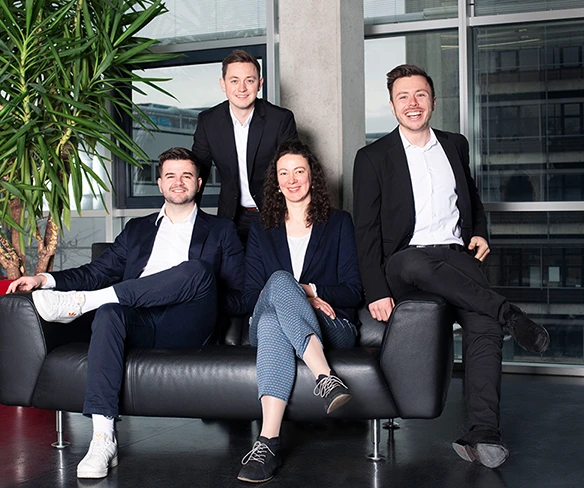
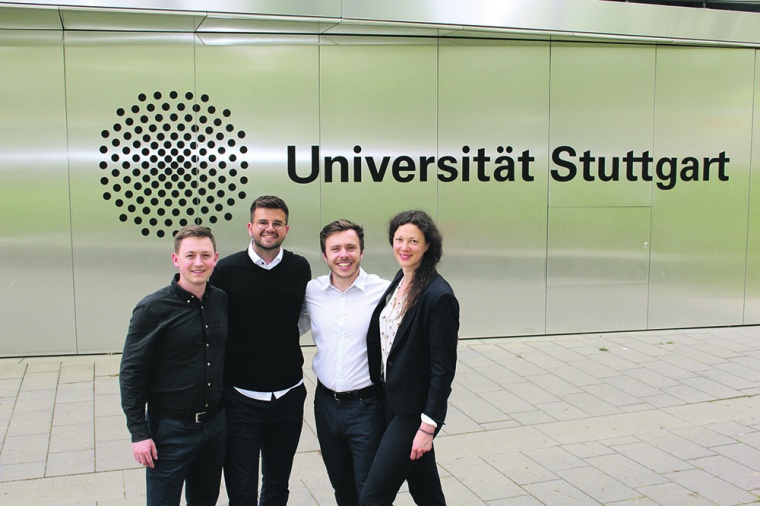
Cyclize, a spin-off from the University of Stuttgart, is developing a plasma-based technology that turns mixed plastic waste and CO₂ into valuable synthesis gas, enabling a shift away from fossil feedstocks in the chemical industry and paving the way for a true circular carbon economy. The idea emerged during CTO Stephan Renninger’s PhD work with CEO Maike Lambarth, where they developed a highly efficient plasma reactor for CO₂ splitting to produce carbon monoxide. While the reactor achieved record efficiencies, producing synthetic ship diesel this way would have been too expensive due to the overall energy demand. This led the team to look for alternative processes in the carbon circular economy where their technology could already be economically viable under today’s market conditions.
From Breakthrough Plasma Reactor to Circular Carbon Business Model
With Cyclize, Lambarth and Renninger aim to transform the currently linear use of carbon into a holistic circular model. Their process reforms plastic waste into non-fossil synthesis gas, effectively turning waste back into a resource and reducing the need for fossil carbon in the chemical value chain. In the long term, they see electrification of the entire chemical industry as the ultimate goal, with plasma technology playing a key role.
Beyond plastics recycling, they are also exploring applications in emissions-free cement production and direct air capture and have already filed patents and demonstrated proof of principle in these areas, even though the market conditions for large-scale deployment are not yet fully in place. The founders report strong interest not only from investors, media and award juries but also directly from potential customers, confirming that there is a real market need and that they are working on the right problem at the right time. Cyclize is funded through the German government’s EXIST research transfer program and receives broad support from the University of Stuttgart, especially from the Chair of Electrical Energy Storage Systems and partner institutes. The team is currently designing and building a demonstrator plant at the university’s pilot facility to showcase continuous operation, while in parallel seeking partners along the entire value chain – from waste management companies to chemical producers – to tailor their process to real industrial needs and scale it up to commercial use.